
When you build a database, you can fall into a trap: you start believing the most important conversations are about your database. They aren't. The most useful months we've spent recently had almost nothing to do with Arc. They were spent listening.
Over the past few months we sat in a lot of conversations with people in manufacturing, in space and satellite operations, and in defense. Plant engineers, mission operators, mission systems leads. We asked what was actually getting in their way, and then we mostly stopped talking. In parallel we read: the downtime-cost studies, the ground-segment surveys, the data-strategy mandates, the anomaly-detection benchmarks, the standards documents. We wanted to know whether the things we kept hearing on calls showed up in the literature too, or whether we were just hearing what we wanted to hear.
They showed up. Across three industries that look nothing alike on the surface, the same problem kept surfacing in different costumes.
The pattern underneath three very different worlds
In manufacturing, it sounded like: "we have more sensors than ever and still can't say why the line slowed down last Tuesday." The data existed. It was scattered across the historian, the MES, and the SCADA layer, on three clocks, in formats that didn't join, and the parts that would have explained the slowdown had been averaged away months earlier to save space.
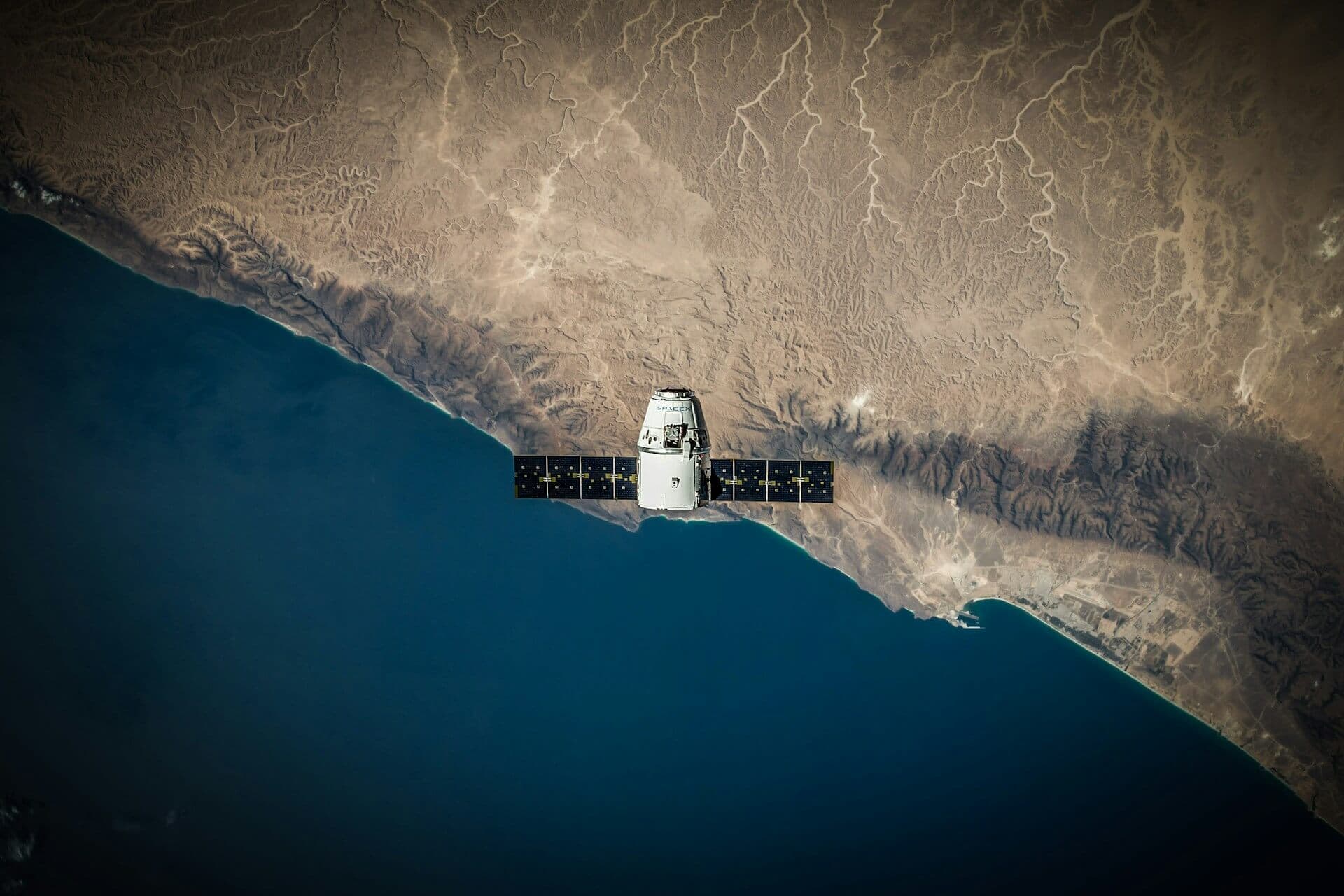
In space, it sounded like: "the pass is eight minutes, and if we don't capture it cleanly, that state of the spacecraft is gone for good." The most valuable, most fragile asset a mission owns is the telemetry it can never re-collect, and the ground systems holding it were never built for the volume a fleet produces.
In defense, at the tactical edge, it sounded like: "we collect more than any force in history and still can't turn it into a decision in time." The bottleneck wasn't sensing and it wasn't people. It was data trapped in silos, stranded by a dropped link, or locked in a format only one vendor could read.
Three industries. One root cause. Every one of them collects extraordinary amounts of time-stamped data and then loses most of its value before anyone can use it - not because the data isn't there, but because the foundation underneath it can't keep everything, can't be questioned fast enough, can't stay open, and can't behave the way the real world actually operates.
So we wrote it down
We turned what we heard, and what we read, into three technical field guides. One per industry. They are not Arc brochures. They spend most of their pages on the category problem, the mechanism, and the architecture, and we name the sources we leaned on so you can check our work:
For manufacturing, we drew on the downtime-cost research (Siemens, Aberdeen, IDS-INDATA), the data-readiness work from Cloudera and Harvard Business Review Analytic Services, Gartner on AI-project failure rates, and the National Association of Manufacturers.
For space, we drew on CCSDS and XTCE standards, NASA's ground-data-system surveys, the European Space Agency's anomaly-detection benchmark, and the SpaceOps literature.
For defense, everything is built on public, unclassified sources: the Modular Open Systems Approach as written into U.S. law and DoD policy, the public JADC2/CJADC2 strategy, the DoD data strategy, and openly published standards like KLV, STANAG, and DDS.
Arc appears in each one, but as the honest example of the patterns we describe: in a handful of places, clearly labeled, not woven through every paragraph. If you take the architecture and build it on something else, the guides still did their job.
What's in each guide
The Data Your Factory Is Throwing Away - manufacturing and IIoT. Why downtime keeps getting more expensive even as plants get leaner, why root-cause analysis takes hours, what downsampling permanently destroys, and what an OEE-and-quality data foundation actually requires.
The Telemetry You Can't Get Back - space, satellites, and mission ops. The economics of the eight-minute pass, the volume and cardinality of fleet telemetry, anomaly detection that's only as good as the archive, and what changes when the fleet, not the spacecraft, becomes the unit of operation.
The Data That Never Reaches the Decision - defense and the tactical edge. The sensor-to-decision gap, the PED bottleneck, operating through DDIL, and why MOSA turns "keep your data open" from a preference into a mandate.
Each one walks the same arc: open in plain language, the way an operations leader would describe the problem, then go a level deeper into the mechanism and the architecture for the engineer who has to build it. Read the on-ramps for the argument, follow the technical sections for the how and why.
Read them
The three guides are free. Tell us where to send the one you want and we'll email you a download link.
A Mission Operations Field Guide
The Telemetry You Can't Get Back
A Tactical-Edge Field Guide
The Data That Never Reaches the Decision
An Industry Field Guide
The Data Your Factory Is Throwing Away
Free. Tell us where to send the one you want and we'll email you a download link.
If you only read one, read the one for your industry. And if you finish it and think we got something wrong, tell us. The whole reason these exist is that we spent a few months being told we had things wrong, and the guides got better every time. That part isn't finished.